A 48-Hour Carp Session: Build and Adapt Your Boilie Baiting Plan
Plan your opening feed, protect a bait reserve and use clear decision points to adapt over 48 hours without topping up blindly or moving too soon.
By Boilies.com· · 5 min read
Build a plan you can change
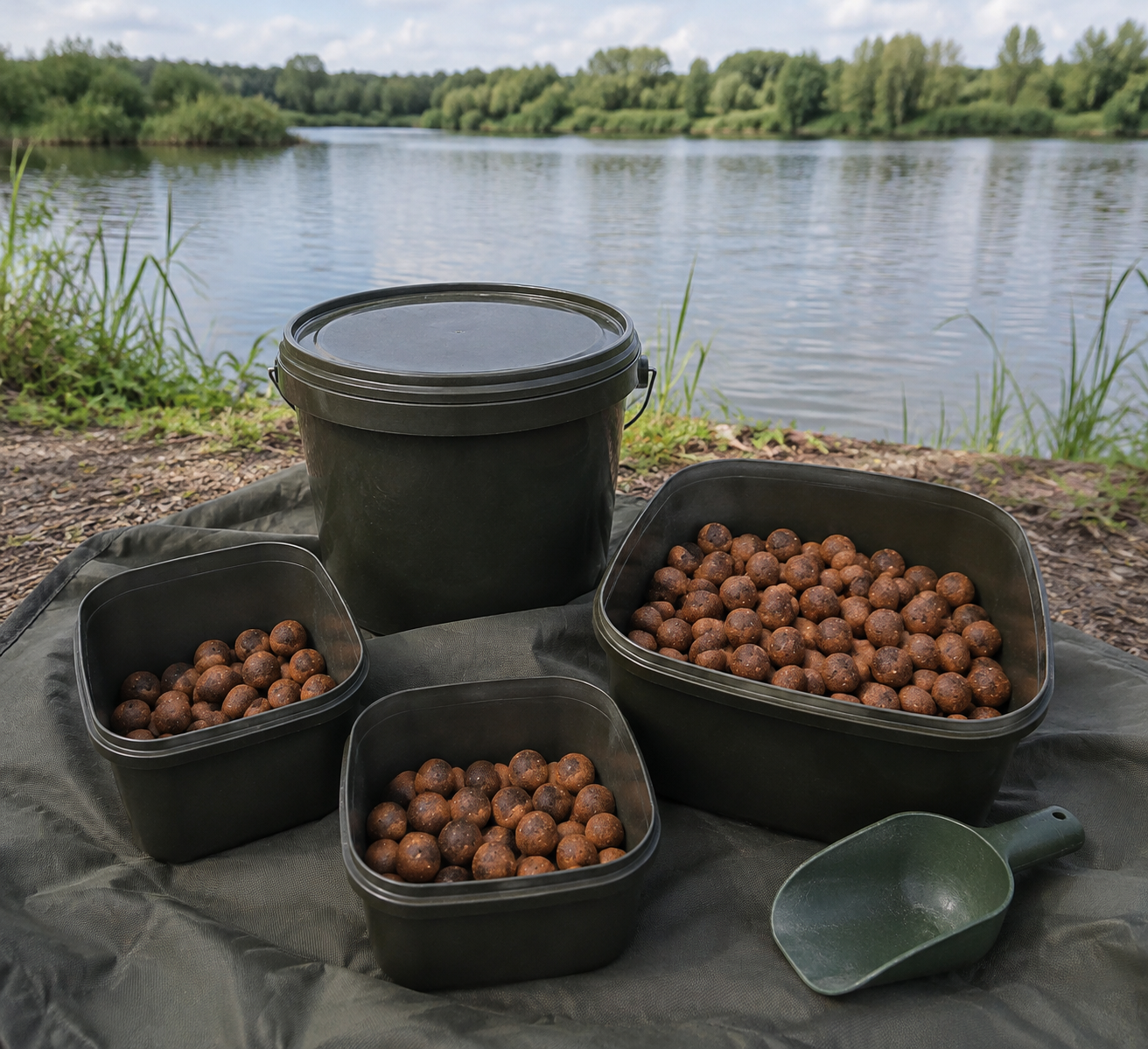
For a 48-hour carp session, divide your boilies into an opening allocation, a replenishment allowance and a protected reserve. These are spending limits, not amounts you must introduce. As an illustrative starting point, allocate one quarter to the opening feed, one quarter to measured top-ups and keep half uncommitted. Adjust those proportions to stock levels, water temperature, nuisance species and previous reliable information. Carrying bait gives you options; putting it all in removes them.
Before unloading, check baiting restrictions, permitted rod numbers, night-fishing rules and your departure time. Then spend a deliberate observation period looking for showing carp, bubbling that travels, disturbed margins and accessible routes between likely holding areas. A convenient swim is not necessarily a productive one. If fish are clearly elsewhere and moving is practical, location deserves attention before bait quantity.
Hours 0–4: establish a controlled starting point
Choose one main feeding area and, where rules and space allow, a separate low-bait comparison spot. Keep both within distances you can cast and feed accurately in the expected wind. Check depth and bottom conditions with the least disturbance needed to find a presentable patch. Do not spread several large feeds around the swim simply to cover uncertainty: you will struggle to identify which area deserves the remaining bait.
Start with a quantity you can measure and repeat. For example, on a lightly stocked water or when activity is uncertain, a few dozen boilies on the main spot may be a more informative opening than several large baiting-device loads. This is an example, not a universal ration; a dense stock of actively feeding carp can justify more. Note the approximate weight or bait count and the footprint, because a tight handful and the same quantity scattered across several metres create different feeding arrangements.
Keep bait type and diameter consistent initially so that later changes remain interpretable. Use a hookbait and rig suited to the lakebed, and check the presentation in the margin before casting. On the comparison spot, fish a single hookbait or a small counted scattering. Record where each rod is fishing, when it went out and how much feed accompanied it. The purpose is not a formal experiment, but avoiding decisions based on a blurred memory.
Hours 4–12: distinguish evidence from expectation
Set observation checkpoints rather than automatic feeding times. At each checkpoint, review captures, liners, visible fish and disturbance around the spots. A landed carp confirms that one fish accepted the presentation; it does not establish that the free offerings have disappeared. Liners may indicate fish passing through rather than feeding. Repeated activity concentrated on the baited area supports a stronger case for replenishment than a single unexplained indication.
After a capture, restore the rod and assess whether a modest, measured top-up is justified. If bites are continuing, small additions can maintain availability without committing the reserve. If the capture was isolated, replacing every gram of the opening feed could simply increase uneaten bait. Where birds or nuisance fish are taking boilies, record that separately: bait loss is not proof of carp demand, and a bigger feed may mainly sustain the unwanted visitors.
Hours 12–24: protect the first night's opportunity
Prepare your night arrangement before light fades: check casting references, safe line routes, spare hookbaits and the amount earmarked for any evening feed. Clip-up marks can help reproduce distance, but do not leave a fishing line secured in the spool clip where a running fish could pull against it. If a spot has produced around dusk, avoid unnecessary plumbing or repeated noisy baiting as that period approaches. Feed earlier when practical, without assuming every water has an evening feeding window.
Through the night, prioritise safe, accurate fishing over maintaining a schedule. If you cannot reliably reach the spot with loose feed, fish the existing bait rather than distribute an uncertain extra load. At first light, compare the rods and inspect retrieved tackle for tangles, weed or a compromised hookbait. A quiet night with poor presentation cannot fairly be treated as evidence that the bait quantity was wrong.
Hours 24–36: change one important variable
Use the halfway review to choose between staying, adjusting the feed or relocating. Stay when fish remain present and your presentation is sound, even if feeding is intermittent. Consider moving when repeated observations put carp elsewhere and your area remains inactive. If the low-bait rod has produced while the main area has not, resist immediately making the successful spot heavily baited. Preserve what is working and test only a small increase if activity supports it.
When staying, change one important variable at a time: quantity, feeding footprint or location. Increasing the feed while changing bait diameter and recasting onto a different bottom leaves no useful explanation for the result. Give the adjustment a realistic observation period, guided by the lake's apparent activity rather than a fixed universal waiting time. Keep a simple entry such as time, spot, feed added, signs seen and outcome; record blank periods as carefully as captures.
Hours 36–44: release the reserve only for a reason
The reserve is for demonstrated demand or a credible new opportunity, not for using up the bag. Several captures from one area, continued fish presence and reliable presentation may justify stepping up measured top-ups. Make each increase small enough that you can stop if activity fades. If moving onto visibly active carp, establish the new spot conservatively instead of transferring the entire unused allowance; fish already present may need little feed to encounter a hookbait.
Factor in the remaining fishing time before any substantial addition. Bait introduced late has less time to contribute to your session, while disturbance from delivering it can disrupt an immediate opportunity. A shorter remaining window usually favours restrained replenishment, especially when you cannot establish whether earlier feed remains. Do not try to rescue a quiet session with a large dump unless there is a specific, defensible reason to expect feeding demand.
Hours 44–48: finish with usable information
Keep effective rods fishing while packing non-essential equipment, subject to safe supervision and local rules. Avoid a final heavy feed merely because boilies are left over. Store unused bait according to its type and storage instructions; keep wet or contaminated bait separate from clean stock. Before leaving, record the total introduced to each spot, productive periods, presentation problems and the observations that prompted changes. Use those notes to refine the next opening allocation, not to turn one session into a permanent feeding rule.
Related articles
More inspiration on bait tactics and similar baits.
Bait Tactics
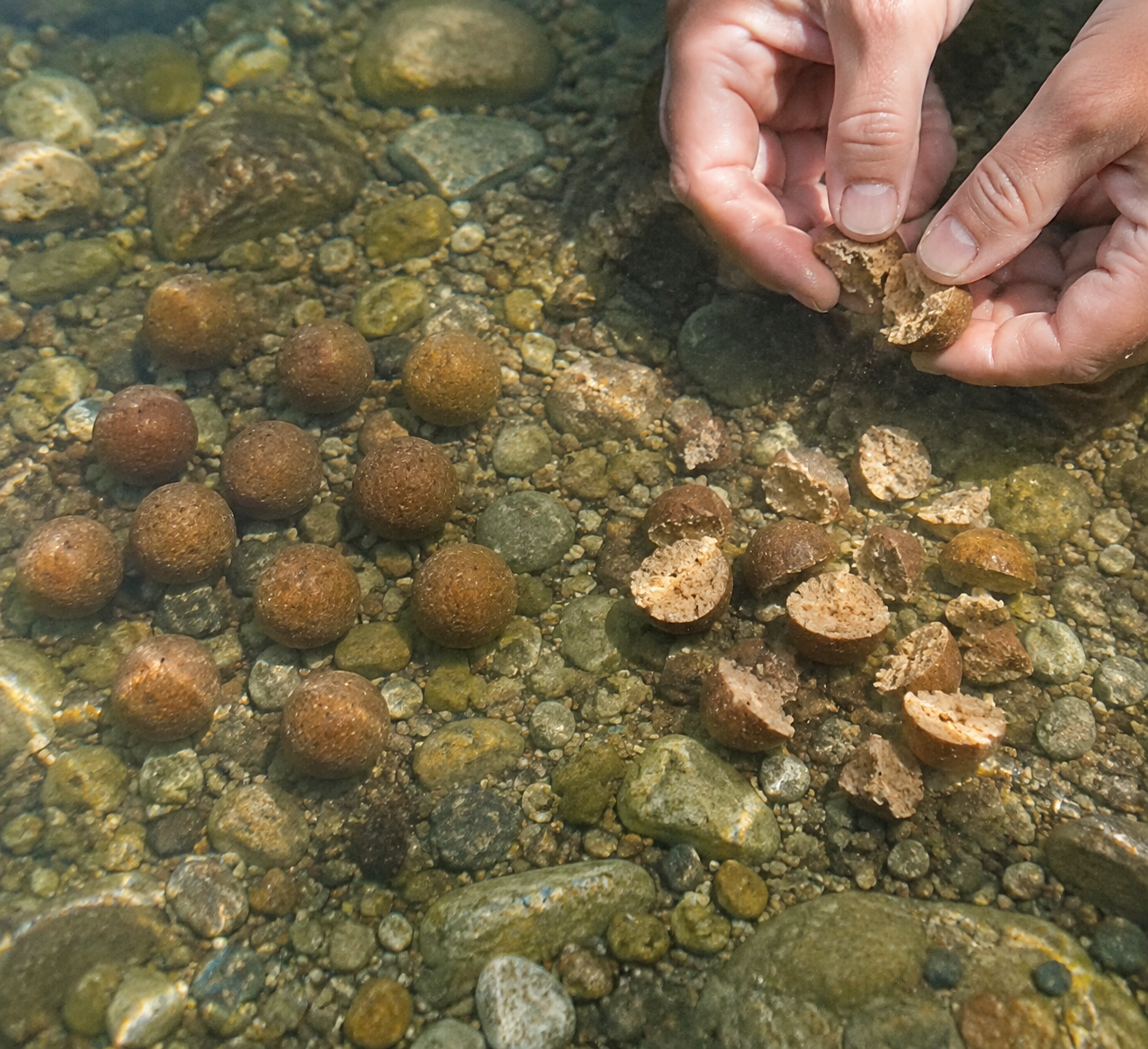
Whole vs Broken Boilies: Feeding Patterns for Pressured Lakes
Choose whole boilies, halves or coarse fragments around the feeding pattern you need—not the assumption that pressured carp always prefer smaller pieces.
23 Oct 2026· 3 min read
Bait Tactics
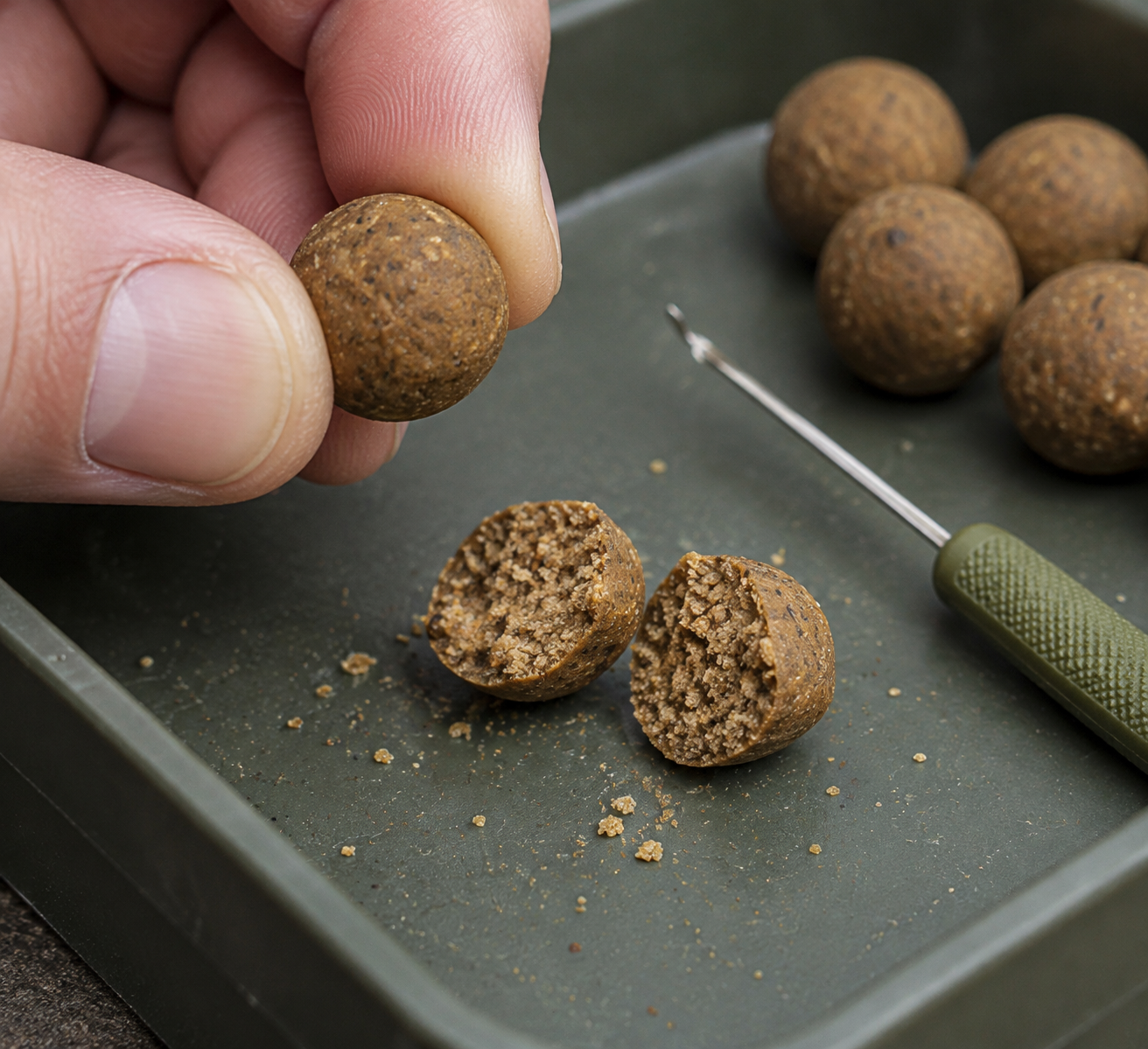
Check Boilie Hookbait Softness Before a Short Session
A gentle squeeze and a spare-bait needle check can reveal whether a boilie is suitable for mounting or needs replacing before a short carp session.
23 Oct 2026· 1 min read
Bait Tactics
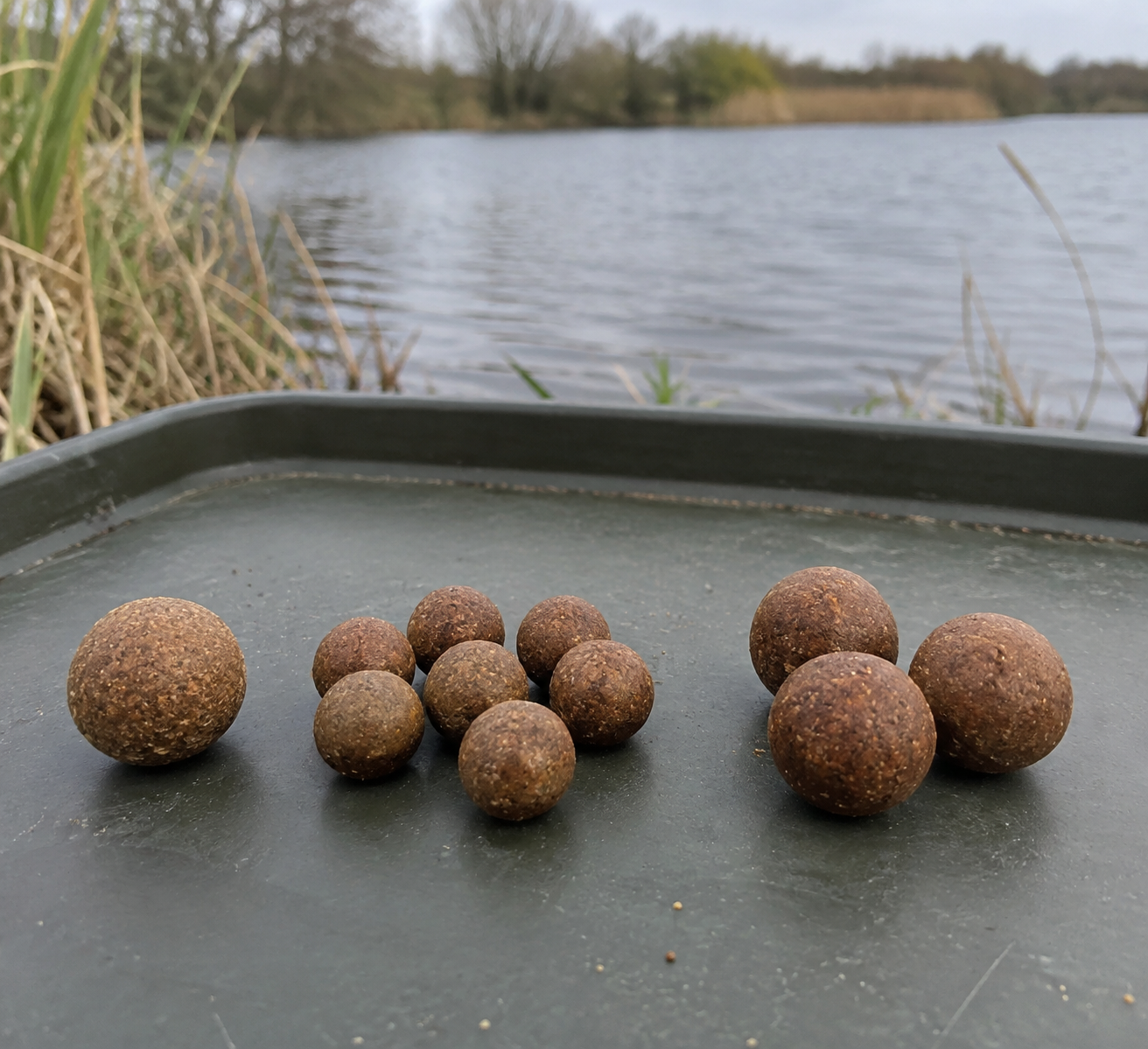
Choosing Boilie Size for Cautious Carp: When to Go Smaller
Smaller boilies are not automatically less suspicious. Choose diameter around feeding behaviour, nuisance fish and the amount of bait on your spot.
6 Oct 2026· 2 min read